
兵临城下
India’s unilateral naming move in China’s Zangnan a self-deception, runs counter to improving ties, warn Chinese experts_我的网站

一 |
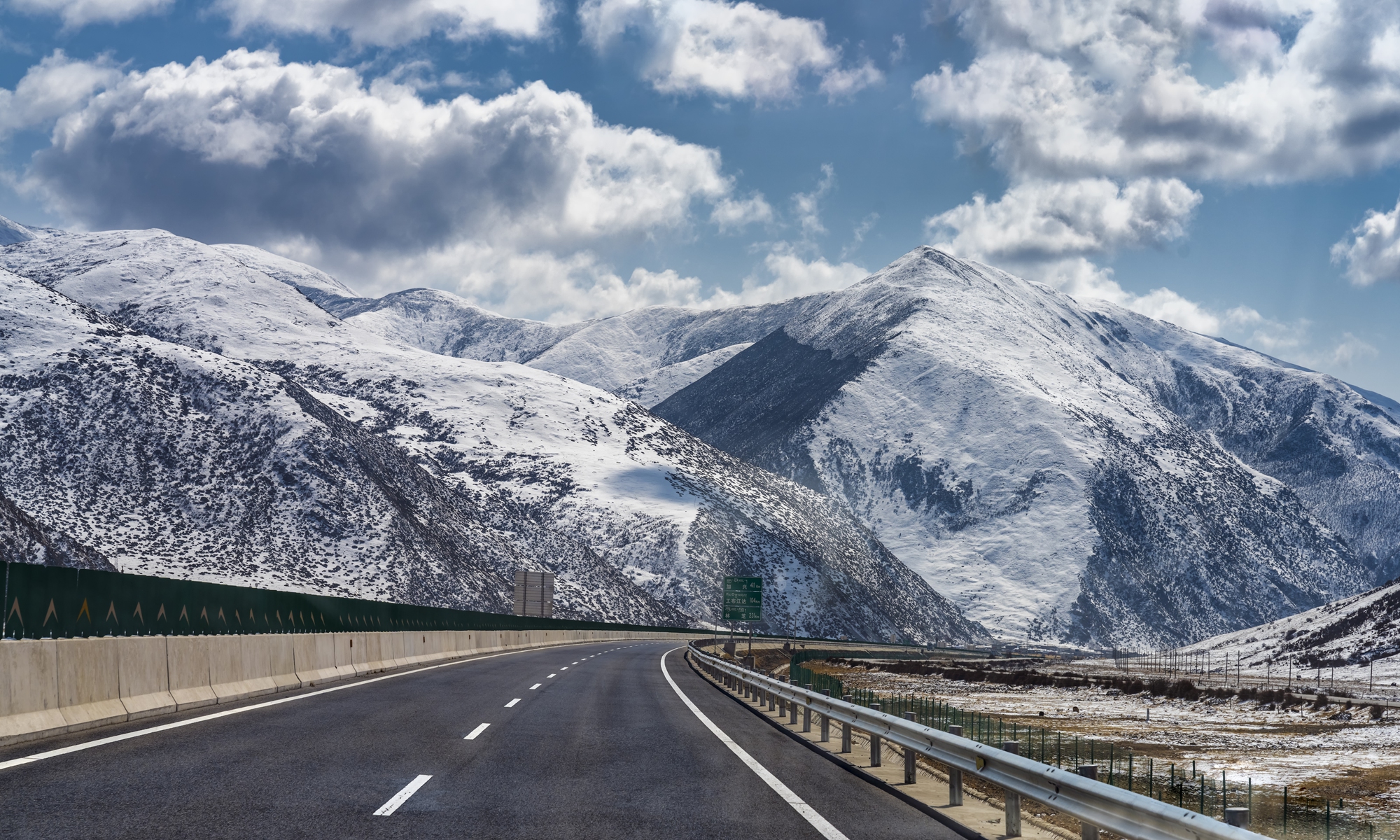
Chinese experts on Sunday slammed India's latest move of identifying 27 locations in China's Zangnan area by their so-called standard names on its official map as self-deception, which runs counter to the improving momentum in bilateral relations and could complicate efforts to properly handle border issues.
The Indian government on Friday said the updated Survey of India map included "four mountain passes and a high-altitude lake," and claimed that the move "is intended to ensure the correct identification of these places" and "improve public awareness of their geographical and historical significance," according to the Times of India.
The claim came shortly after the 36th meeting of the Working Mechanism for Consultation and Coordination on China-India Border Affairs (WMCC) was held on August 6 in New Delhi.
During the meeting, officials from both sides discussed issues including boundary delimitation, border management and control, mechanism building, and cross-border cooperation. They agreed to maintain communication through diplomatic and military channels and jointly safeguard peace and stability in the border areas, according to a statement released by the Chinese Foreign Ministry on Friday.
China has been carrying out standardization of geographical names in the region for a long time. At a time when China-India relations are showing signs of improvement and leaders from both countries are expected to engage through multilateral platforms, any unilateral action by India that escalates the border situation shows no point and will not serve the broader interests of bilateral relations, Qian Feng, director of the Research Department at Tsinghua University's National Strategy Institute, told the Global Times on Sunday.
Qian said India should avoid turning border issue into a larger dispute, as such actions could stifle the improving political ties between the two countries.
Consistent position
China's position on the Zangnan region is consistent. The area covers parts of Nyingchi and Shannan and is located in Southwest China's Xizang region, which has been China's territory since ancient times.
Since 2017, China's Ministry of Civil Affairs has released six batches of standardized names for locations in Zangnan, with a total of 112 names announced as of April 2026. These names cover villages, mountain passes, rivers and peaks, accompanied by standardized Chinese and Tibetan names as well as geographic coordinates.
The dispute over the region has a long historical background. The illegal "McMahon Line" drawn between China and India during the 1914 Simla Convention was never signed or recognized by successive Chinese governments and therefore has no legal validity.
After China's Ministry of Civil Affairs published the sixth batch of names that should be used for places in Zangnan region on April 10, two days later, the spokesperson for India's Ministry of External Affairs expressed rejection to China assigning names to places in so-called "Arunachal Pradesh," adding that these actions detract from ongoing efforts to stabilize bilateral ties.
Chinese Foreign Ministry Spokesperson Guo Jiakun said at a routine press briefing on April 14 that Zangnan region is China's territory. China does not recognize the so-called "Arunachal Pradesh" illegally set up by India. It is fully within China's sovereign rights for the Chinese government to issue standard names for some of the places in Zangnan.
China-India relations are generally stable at the moment. China's commitment to improving and growing China-India relations has not changed. We hope the two sides will work in the same direction and act more in ways conducive to bilateral relations, Guo stressed.
India's latest naming of 27 locations is a unilateral administrative move and does not alter the legal status of the area, Guo Xuetang, a professor at the center for South Asia and Indian Ocean Studies under Shanghai International Studies University, told the Global Times.
According to Guo Xuetang, India's move is an attempt to strengthen its claim of control over the area and create additional leverage in future boundary negotiations. However, such actions have no practical meaning and will only undermine the atmosphere for negotiations between the two countries.
Not merely from the perspective of international law, Zangnan region has culturally, religiously and historically been connected within Xizang, with close links between local communities and civilization, the expert stressed.
Positive momentum
Despite differences over the boundary issue, China and India have in recent months continued efforts to stabilize relations. In December 2024, China and India's representatives for boundary affairs reached a six-point consensus during talks.
Last week, the Nathu La Pass, which was closed for six years, officially resumed operations, signaling a new phase of mutually beneficial cooperation and development in cross-border trade.
During a meeting between Chinese Foreign Minister Wang Yi and Indian Foreign Minister Subrahmanyam Jaishankar on July 22 in Manila, the Philippines, Wang said China and India should consolidate the positive momentum in bilateral relations, and strengthen coordination and cooperation in international and regional affairs, while Jaishankar said India's positions on issues concerning Taiwan and Xizang have not changed, and that India respects China's sovereignty, Xinhua reported.
In the past two years, leaders of China and India have met in Kazan, Russia, and Tianjin, China, and agreed that China and India are partners rather than rivals, and that their development should be viewed as opportunities rather than threats, Wang said.
"India's latest move is essentially an attempt to reinforce its claims over disputed territory and counter China's sovereignty position, a move that amounts to self-deception. Unilateral name changes cannot alter the historical and legal facts surrounding the Zangnan region, nor can they shake China's resolve to safeguard its territorial sovereignty," Guo Xuetang said.
The only way to resolve the China-India boundary issue is through equal negotiations and a fair settlement based on historical and legal principles, while unilateral actions that create tensions or change the status quo will only harm mutual trust and border stability, Guo said.
。

二 | Nancy编译 今日(3月1日)新西兰副司法部长Nicole McKee在惠灵顿宣布了《枪支禁止令立法修正案》。这一举措将赋予警察和法院更大权利,全面打击黑帮犯罪。 Advertise with us 严厉打击黑帮犯罪 副司法部长McKee表示,“长期以来,黑帮一直是社区中令人不安和不受欢迎的存在。” 她指责上届政府对犯罪采取了“软弱”立场,导致黑帮人数不断增加。

三 | 她强调了新政府的重点是严厉打击黑帮,并提议禁止在公共场所和非交往场所佩戴帮派徽章。 同时,政府还将对《武器法》进行评估,允许半自动武器用于比赛,这是在2019年基督城恐怖袭击之后被禁止的。 新“禁枪令法案”更为严苛 该法案修正了工党颁布的立法。《枪支禁止令》原本禁止任何因涉及枪支犯罪和其他特定犯罪而被判有罪的人接触或使用枪支。而McKee表示,修正案做出了三项关键修改。 首先,修正案扩大了禁令的适用范围,不再仅限于有犯罪记录的黑帮成员,而是将更多黑帮成员纳入禁令范围。其次,修正案建立了一个机制,允许“不再构成威胁”的人取消他们的禁枪令(FPO)。最后,修正案赋予了警方更多的搜查权力,以确保禁令得以执行。

四 | McKee预计修正案通过后,FPO的适用人数将从目前的31人增加到80-100人,甚至更多。她还强调,修正案并非对《权利法案》的过度扩张,而是为了确保公共安全。 赋予警察和法院更大权利 McKee强调,修正案特别关注黑帮,允许法院对任何黑帮成员或关联人在犯有任何毒品、枪支或暴力犯罪后颁发禁枪令。同时,确定谁是黑帮成员或关联人将使用国家黑帮名单(尽管该名单因准确性问题受到批评)。 此外,修正案还赋予了法官更大的权力,包括颁发长达10年的禁令,并将违反禁令的行为定为刑事犯罪。

五 | 对于修正案的实施,政府表示将全力以赴,尽管实施过程可能面临挑战。 司法部长Paul Goldsmith在昨天的特别委员会上表示,尽管实施可能具有挑战性,但不应该因此放弃减少对黑帮的打击力度。 相关阅读: 国家党政府宣布:重拳出击,严惩黑帮! 奥克兰一帮派为创始人举行葬礼,摩托车队穿过街道,警方正密切监控 帮派葬礼游行现非法驾驶行为 警方已发出55份违规通知 帮派机车集结奥克兰,当街烧胎,为同伴送葬 帮派葬礼致北岛小城交通扰乱,市议会“行方便”,国家党怒斥软弱 工党承诺再增加300名警察,加大对帮派和跟踪骚扰的打击 六年来,违反居家监禁规定的帮派成员人数增加了60% 注:本文为编译/原创,欢迎转发分享;但严禁复制等未经授权的非法使用。违反上述声明者,本网将追究其相关法律责任。使用授权请联系[email protected]。

六 | chineseherald.co.nz All Rights Reserved 版权所有 (责编:Nancy) 来源 - 相关内容 总理坚称“有权”领5.2万纽币住宿津贴,工党党魁抨击他“极其虚伪” 曝光!新西兰议员和部长的开支,都花了多少钱? 工党攻击警察部长是“雇佣兵”杀过人,部长回应 冲上热搜!总理被曝领5.2万纽币住宿津贴住自己的房子 新西兰将哈马斯的政治机构指定为恐怖主义实体 “疯狂三月”来袭,AT考虑实施每周票价上限,不超过…… 不舍Newshub关闭,AM Show知名主持人泪洒直播间 枪支法又要修订,联合政府打算怎么改?。
Current article:http://xwidu.cuancuguanzhongnieqinyazhun.cyou/z4e2dw0/20260826/4448.html
Published on:00:00:00
评论
-
关于我们 | 我的网站 版权所有
Copyright ? 2019 我的网站 All Rights Reserved